- calendar_today August 27, 2025
Over the past few years, artificial intelligence has shifted from a Silicon Valley buzzword to a very real force in our daily lives. Whether it’s customer-support chatbots, automatic checkout counters at the supermarket, or pre-diagnostic algorithms at the hospital, AI is fast changing the way we do our jobs. And in Minnesota, employees are coming to recognize that this isn’t just a trend—it’s a revolution.
Based on estimates by the World Economic Forum, the impact of AI and automation may extend to as much as 50% of all jobs worldwide by 2030. This sobering fact is causing ripples in Minnesota, where the urban and rural economies alike rely on sectors that are susceptible to automation. From the factory floors of Greater Minnesota to the Minneapolis and St. Paul offices, employees are starting to get ready for a future dominated by machines and machine learning.
A State on High Alert
Minnesota’s economy is multi-faceted. It is founded on a mix of healthcare, education, agriculture, finance, and manufacturing. A large portion of these sectors is vulnerable to disruption.
For example:
Healthcare networks such as the Mayo Clinic and Fairview Health Services are heavily investing in AI technologies for diagnostics, recordkeeping, and patient interactions.
Shopping centers and logistics hubs near Minneapolis and Duluth are automating warehouses and customer service.
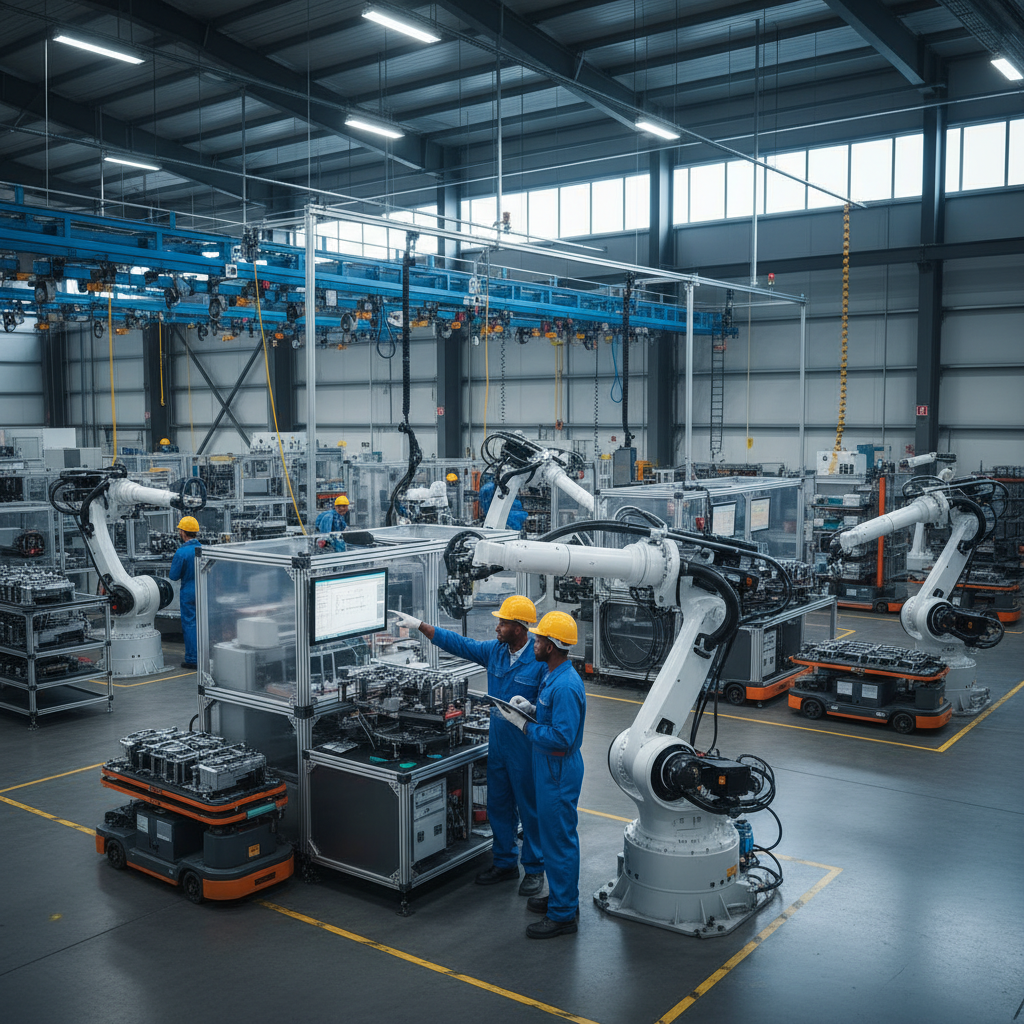
Factory manufacturers in cities such as Rochester and St. Cloud are introducing robotic systems to enhance factory floor efficiency.
Employees aren’t waiting idly by. Numerous employees are already pondering how their job may transform—and what can be done about it.
“I worried about robots replacing us,” says Kelly Sorenson, a sales associate from Bloomington. “Now, I’m more concerned about acquiring new skills. The changes are inevitable whether I like it or not.”
Twin Cities Take the Lead
In the Twin Cities, where tech and financial sector jobs are more prevalent, there’s a proactive effort towards AI adoption. Large employers such as U.S. Bank, Target, and Best Buy have already started applying AI in customer analytics, fraud detection, and supply chain optimization. These changes not only cut costs, entire departments are redesigned around them.
Many of these businesses, however, are opting to retrain instead of replace.
“Our goal isn’t to eliminate jobs—it’s to evolve them,” says a representative from Target’s innovation team. “We’re encouraging employees to reskill so they can thrive in roles that didn’t exist five years ago.”
This philosophy has sparked interest in local universities and community colleges, which are rolling out AI and data-focused courses aimed at working professionals.
Educational Institutions Respond
Minnesota’s universities and colleges are rising to meet the need. The University of Minnesota, Minnesota State University, and state community colleges are opening new programs in:
- Machine learning and data science
- Robotics and automation engineering
- AI ethics and human-computer interaction
These programs are particularly valuable for mid-career employees, many of whom never envisioned they’d be learning algorithms or coding languages.
“I was a nurse for 15 years,” says St. Paul’s Lila Martinez. “Now I’m pursuing an online certificate in healthcare tech so I can remain employable as systems become digital.”
For younger students, schools are integrating awareness of AI into K–12 STEM curricula, working to prepare the next generation to face a radically altered job market.
Rural Minnesota Confronts Special Challenges
Outside the metropolitan region, in areas such as Mankato, Fergus Falls, and the Iron Range, the path to AI adoption is more bumpy. These towns depend more on old-line industries—farming, warehousing, trucking, and light manufacturing, many of which are good candidates for automation.
But rural Minnesotans are resourceful if nothing else. Town governments are partnering with technology associations to offer digital skills training and extend broadband connections, two of the biggest barriers to rural inclusion in the AI economy.
“We don’t want to be left behind,” says Carl Lindstrom, a dairy farmer outside Alexandria. “If AI can help us work smarter and save money, we want to learn how to use it.”
Policy Initiatives and Support Structures
Embracing the possible disruption, Minnesota’s Department of Employment and Economic Development (DEED) has introduced a number of initiatives to aid employees during the transition. These include:
- Subsidies for job training by firms investing in AI reskilling initiatives
- Career ladder grants for mid-career professionals wishing to transition into tech
- Workforce guidance for those who have been affected by automation-driven redundancies
Governor Tim Walz has also highlighted the imperative for fair AI integration to make certain that communities of color, low-income residents, and aging workers are not disproportionately driven out by technological change.
The Emotional Toll of Uncertainty
While AI is undoubtedly a technical challenge, it’s also an extremely emotional one. Worry about job loss, uncertainty regarding the future, and anxiety about acquiring new skills later in life are worrying many Minnesotans.
“There’s no doubt it’s daunting,” says Duluth career counselor Mary Elton. “People feel as though the ground is moving beneath their feet. But the thing is to remain curious and open-minded. It’s not about being tech-perfect—it’s about being willing to evolve.”
Community organizations are filling in the gaps to provide workshops, career coaching, and emotional support, recognizing that resilience is as crucial as retraining.
Minnesota’s Future: Resilient, Not Replaced
Although the possibility of losing jobs to AI is true, Minnesota is facing the future with resolve. The state’s mixture of urban ingenuity and rural grit provides a distinct benefit. Rather than fighting change, Minnesotans are seeking to welcome it—and to mold it to their own will.
Whether it’s a warehouse employee learning to operate a fleet of robots, a farmer interpreting crop yields from drones, or a customer support rep getting proficient in a chatbot platform, the future is not about being replaced by AI—it’s about collaborating with it.