- calendar_today September 2, 2025
Amazon’s drone delivery service is no longer just a sci-fi test run—it’s becoming a genuine aspect of the retail and logistics environment. And now, it’s arrived in Minnesota. As the tech titan expands its drone business throughout the state, Minnesotans are all eyes. What does it mean for the consumer at large? More to the point, what does it mean for small businesses attempting to keep up in a rapidly evolving market?
The response is thrilling and multifaceted. Amazon’s action has the potential to transform how small businesses work, how fast customers demand service, and how goods travel from warehouse to doorstep. As drones start buzzing through Minnesota skies, the ripple effect already is being experienced throughout the local economy.
A Game-Changer for Delivery Expectations
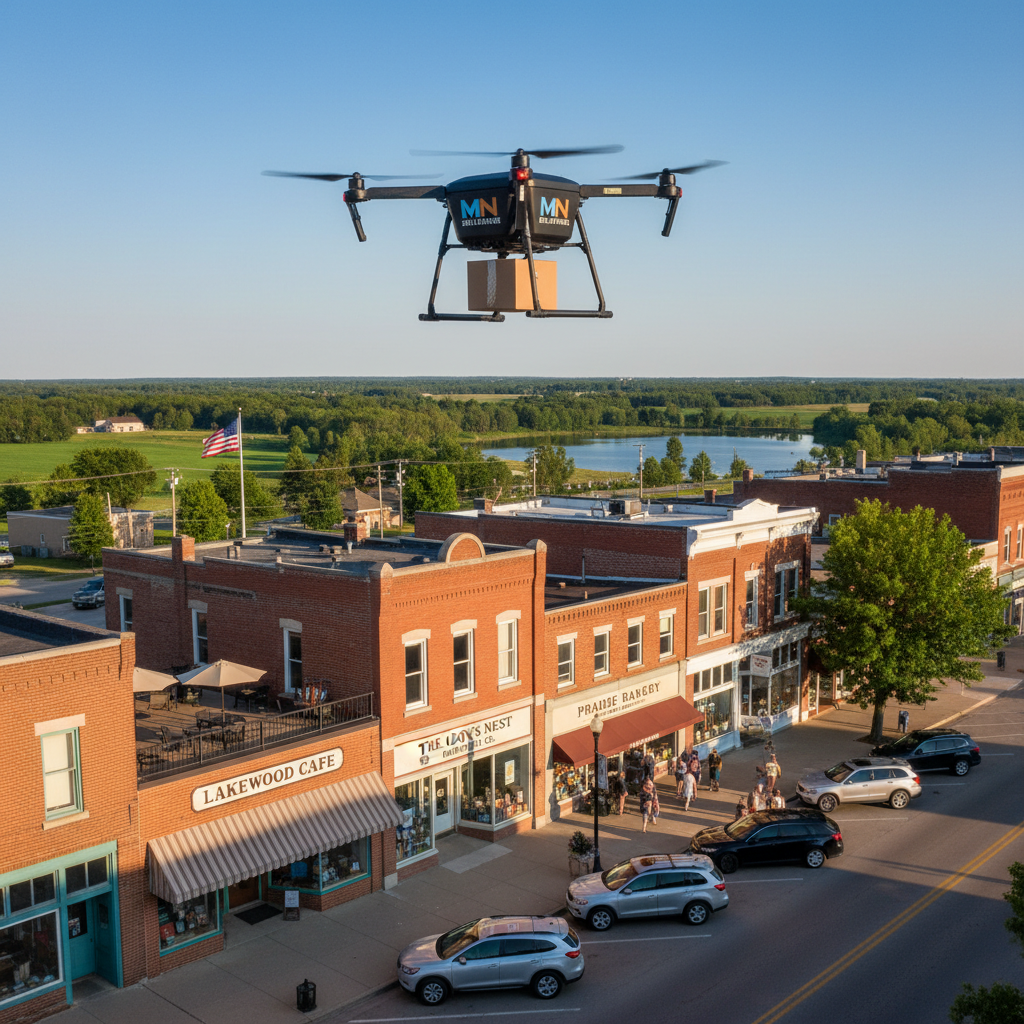
Amazon’s drone initiative will get customers light packages in 30 minutes or less. That’s speed of a different level. When the customer can shop something and get it before they even reach the door to leave for work, expectations shift.
This change puts a squeeze on local stores and delivery companies. Whether it’s a neighborhood hardware store, a local bakery making home deliveries, or an online merchant shipping out of Minneapolis, speed and convenience become the new gold standard. Companies unable to keep up can risk being left behind, particularly in those industries where fast delivery is a key selling point.
But this challenge also holds potential. By learning about the ways that drones are transforming customer behavior, local companies can start shifting in smart, strategic initiatives.
Increasing Access to Remote Areas
Minnesota’s geography features a broad array of urban and rural areas. Numerous small towns and agricultural communities exist far from large distribution centers. Historically, these communities have experienced delays in delivery—particularly during the winter months when road conditions will affect deliveries.
Drones are making that possible. With their ability to soar above traffic and terrain, Amazon’s drones are making instant delivery a reality in areas where it was once impractical. For shoppers in those areas, it means faster access to necessities. For local businesses, it might mean more consistent access to supplies, restocking of inventory, and even better customer service.
Picture a small company in northern Minnesota that requires packaging material or office supplies. Through drone delivery, what would previously take a couple of days might only take a couple of hours.
Effect on Competition and Innovation
Amazon’s presence through drones ups the competitive ante. When a global giant moves into an area with advanced technology, smaller firms tend to fear loss of market share. But competition also brings about innovation.
Local businesses can now consider how they create value. For instance, a boutique store may not have drone delivery, but it can focus on local goods, personalized service, and community tie. Others may collaborate with local tech startups to consider drone options for their own purposes—or invest in alternative delivery methods such as bike couriers, same-day vans, or smart lockers.
Others might even venture to make deals with Amazon itself, selling on the platform and leveraging the drone network to get their products to customers even faster.
Building New Business Models
Drone delivery doesn’t just accelerate—its changes the whole dynamics of logistics. And that creates new business models.
Subscription services might become more feasible for local manufacturers. A St. Paul coffee roaster, say, could provide weekly refills by drone to regulars. A Duluth flower shop might arrange timed delivery to offices or homes, a pleasant surprise and delight.
Even emergency delivery for time-sensitive items such as medications, documents, or small replacement parts becomes more convenient and cost-effective with the inclusion of drones.
These types of offerings not only make money—they forge stronger business-community connections.
Challenges and Considerations
Of course, drone delivery is no panacea. There are still some challenges to overcome. Weather is one of the biggest—Minnesota winters are no joke. Snow, ice, and wind could ground drones or restrict their use for several months of the year.
There are also legal and logistical considerations. Companies will have to deal with airspace regulations, zoning requirements, and changing local legislation regarding drone use. Safety, privacy, and noise are also concerns for residents, and these issues can determine how widely drone services are embraced.
Nevertheless, Amazon’s cautious response—launching drone delivery in certain neighborhoods and consulting extensively with the authorities—demonstrates that such problems are being addressed. And as the technology develops, further solutions will be found.
The Road Ahead for Minnesota’s Business Community
Amazon’s drone delivery push in Minnesota is more than a tech upgrade—it’s a cue. The way consumers shop, get things delivered to them, and interact with customer service is evolving. For local companies, this isn’t a moment to rest. It’s a moment to reimagine, react, and grasp new tools and strategies.
Whether you’re a small business owner in the Twin Cities or running a family shop up north, the skies above are offering new possibilities. It’s no longer a question of if drones will play a role in your business—but how.
Final Thoughts
As Amazon drones start making silent landings all over Minnesota, local businesses confront an hour of change. With the right attitude and willingness to adapt, many will discover drone delivery is not something to fear—but a gateway to fresh potential, improved service, and intelligent logistics.