- calendar_today August 27, 2025
A new air leak on the International Space Station (ISS) has forced NASA to postpone the upcoming commercial astronaut flight. The space agency admitted to the problem when it delayed Axiom Mission 4 that planned to transport four private astronauts to the station but provided limited public information about the situation. NASA officials and engineers are increasingly worried about the situation behind closed doors.
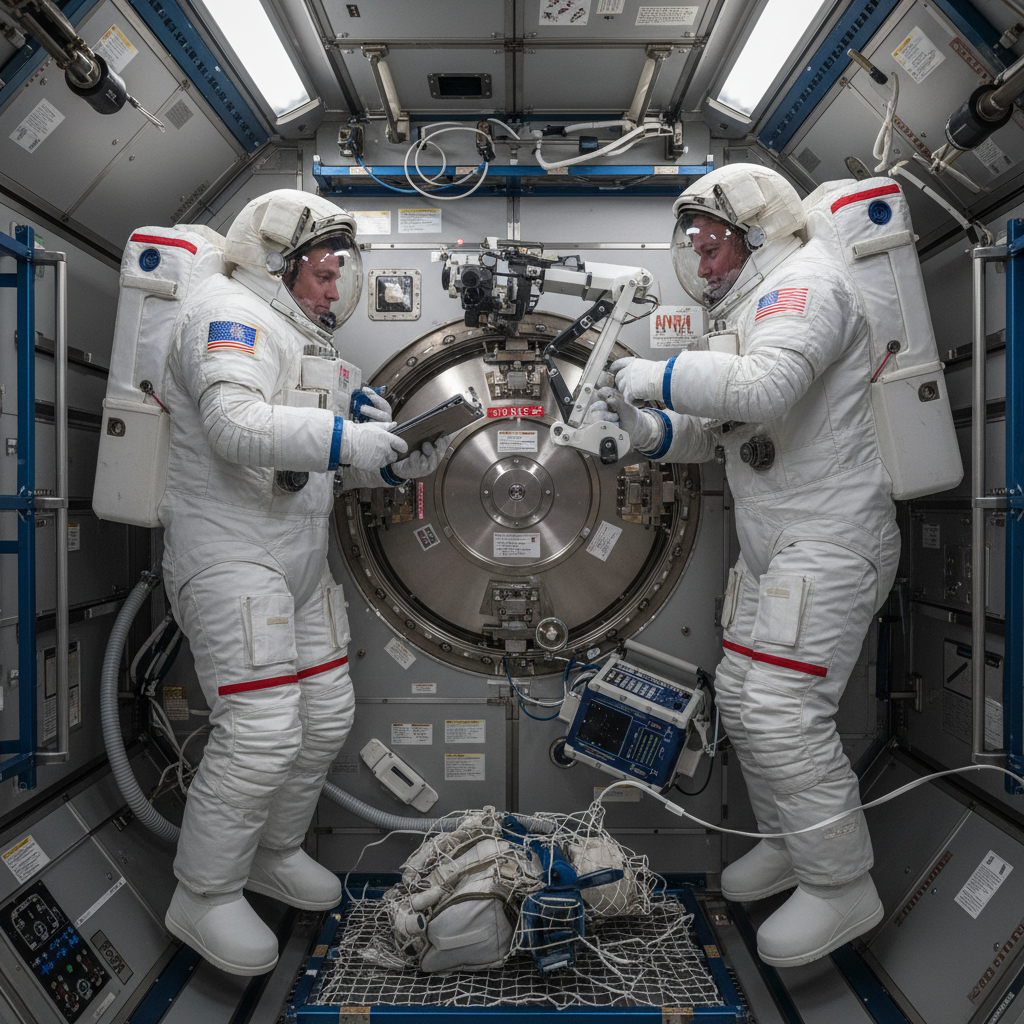
This leak is not an isolated incident. Since 2019 the ISS has experienced an ongoing slow air leak. The source of the leak has been identified as the Russian Zvezda service module which launched in 2000 and remains one of the station’s oldest components. The problem exists in the PrK transfer tunnel because it links Zvezda to the docking port which serves both Soyuz crew vehicles and Progress resupply spacecraft. The Russian cosmonauts have executed multiple repair attempts on the PrK’s small cracks over time. The repair attempts successfully lowered the leak rate but failed to achieve complete elimination of the problem. In extreme cases the station experienced air loss of about two pounds each day. The most effective solution discovered so far involves keeping the hatch to PrK sealed except during spacecraft docking operations.
Recent weeks showed evidence of a breakthrough. The Russian space agency Roscosmos announced that the repairs on the PrK module were finished and it is now “completely sealed.” NASA issued a similar statement. NASA and Roscosmos jointly confirmed that they had successfully stopped the previous leak from occurring inside the module. That news should have brought relief. But it didn’t.
Despite having sealed the PrK module the ISS continued to experience a drop in overall air pressure. Two sources who are familiar with the situation reported that engineers have been puzzled by this development which has led to new worries. How could the station continue to lose air when the long-leaking module was now sealed? The primary theory suggests compromised seals on the hatch to PrK as the possible reason for the leak. According to this hypothesis air from the ISS escapes through the hatch seals and enters the PrK. The module’s sealed environment maintains stable pressure which creates the illusion that air loss has stopped even though the station continues to lose atmosphere.
NASA is now closely monitoring the situation. The agency approaches this matter with serious concern from within. According to a senior source the atmosphere inside the ISS program is filled with worry. NASA postponed Axiom Mission 4 because it had been planned to launch this week. The delay enables agency officials to better assess the current conditions and decide if extra problem-solving measures are required. The planned launch date for June 18 stands as tentative because it relies on how the leak develops and the discovery of an effective solution.
There’s another reason this situation is so troubling: the risk of high cycle fatigue. Structural fatigue occurs in metals like aluminum when they endure repeated stress throughout their lifetime. Repeated bending of a paperclip until it breaks illustrates the same principle. The International Space Station’s older components including Zvezda have begun to demonstrate signs of aging after years of remaining in orbit. NASA’s 5×5 risk matrix shows that structural cracking stands as the highest concern because it considers both the potential occurrence and its impact as the most serious problem.
High cycle fatigue presents a tangible threat to structural integrity. Aloha Airlines Flight 243 experienced a disastrous failure in 1988 when metal fatigue caused a fuselage section to separate during flight which left passengers exposed to open air. The aircraft managed to land without incident but this event serves as a strong warning regarding the unexpected and destructive potential of metal fatigue.
NASA has not provided substantial information to the public in response to increasing worries. The agency has yet to organize a press conference while remaining silent on numerous journalist inquiries. The International Space Station crew maintains normal operations according to official reports; however, ongoing material fatigue and aging of the ISS suggests the recent leak could indicate serious structural weaknesses that demand immediate attention.