- calendar_today August 28, 2025
.
Susan Monarez has been forced out as director of the Centers for Disease Control and Prevention (CDC) weeks after being confirmed by the Senate in a development that would be yet another significant shake-up for the beleaguered public health agency.
The initial news of the ouster was reported by The Washington Post, which cited multiple officials in the Trump administration. Ars Technica reached out to the Department of Health and Human Services (HHS) for confirmation, and the agency directed us to a post on its official X account. That post stated:
Susan Monarez is no longer director of the Centers for Disease Control and Prevention. We thank her for her dedicated service to the American people. @SecKennedy has full confidence in his team at @CDCgov, who will continue to be vigilant in protecting Americans against infectious diseases at home and abroad.”
The post did not indicate the reason for the change in leadership. Per The Washington Post, U.S. Health Secretary Robert F. Kennedy Jr., an outspoken anti-vaccine activist, had been pressuring Monarez over her COVID-19 vaccine policies. Kennedy reportedly wanted her to revoke approvals of the vaccines. But Monarez declined to act on his request without first conferring with the CDC’s vaccine advisory committees. Kennedy then allegedly told Monarez that she had to resign, telling her that she had not supported President Trump’s policies.
Monarez reportedly refused to resign and instead reached out to Senator Bill Cassidy (R-La.), who had helped confirm Kennedy himself at the Senate earlier this year after Kennedy had given him some assurances. Cassidy had clashed with Kennedy over Kennedy’s actions, which led to a heated exchange between the two. Following that, officials in the administration told Monarez she needed to resign or face being fired.
Lawyers for Monarez, Mark Zaid, and Abbe Lowell, posted a statement on social media saying that Monarez has not resigned and also has not received any official notice of being fired by the White House. “Her ouster came after she refused to rubber-stamp unscientific, reckless directives and fire dedicated health experts,” the statement said. “She chose protecting the public over serving a political agenda.” Zaid later confirmed to Ars Technica that as of 8:15 p.m. ET on August 27, Monarez had still not received any official notice of termination.
CDC at Breaking Point
Monarez’s confirmation had been hailed as a major step forward. Monarez was confirmed in a 51–47 vote strictly along party lines in late July. She became the first CDC director ever to have to be confirmed by the Senate, as a 2022 law had instituted the requirement. Kennedy himself swore Monarez into her role on July 31, hailing her “unimpeachable scientific credentials” and that she would be able to restore confidence in the CDC.
Monarez’s résumé was long and impressive. She has a PhD in microbiology and immunology and was previously deputy director at the Advanced Research Projects Agency for Health (ARPA-H) under President Joe Biden’s administration. Before that, she had worked at the Biomedical Advanced Research and Development Authority (BARDA), Department of Homeland Security, White House Office of Science and Technology Policy, and the National Security Council. She also served as acting director of the CDC early this year before briefly stepping down when Trump nominated her for the position.
Experts in public health had generally reacted positively to her appointment. Jennifer Nuzzo of Brown University called Monarez a “loyal, hardworking civil servant who leads with evidence and pragmatism.” Georges Benjamin, head of the American Public Health Association, lauded her as “a very strong researcher and a competent administrator.”
Her tenure in the role was short, though, and was ended during a time of intense turmoil for the agency. The CDC has been experiencing a purge of hundreds of staffers through both layoffs and buyouts in recent months. At the same time, a number of programs have been cut or are facing obstacles. Kennedy himself has caused outrage with statements about COVID-19 vaccines being “the deadliest vaccine ever made” and calling the CDC “a cesspool of corruption.”
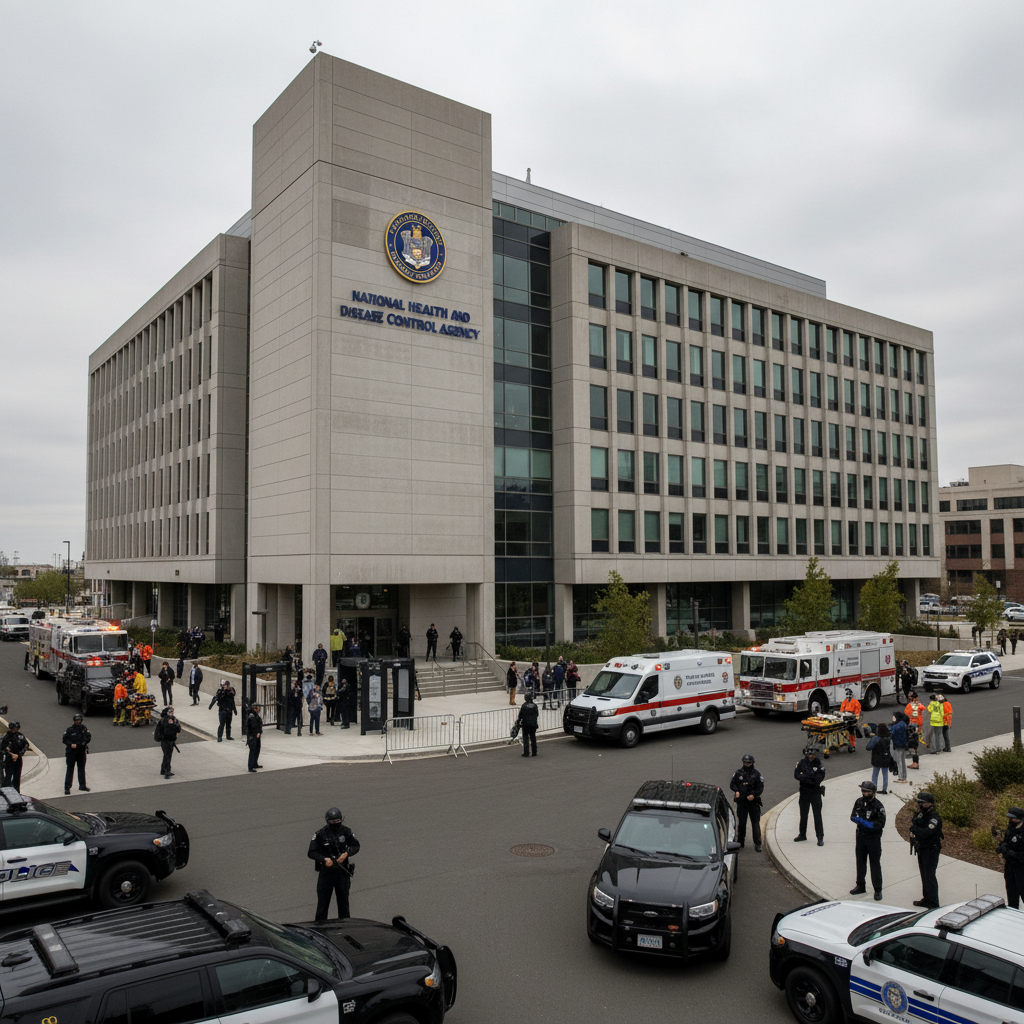
On August 8, a gunman radicalized by vaccine misinformation shot his way onto the CDC campus. He was able to discharge close to 500 rounds, and about 200 of them hit six different buildings at the CDC. One local police officer was killed, and terrified staff had to hide or flee as the shooter roamed the CDC grounds. The shooter had blamed vaccines for his own health problems and had specifically targeted the CDC.
The resignations coming in the wake of Monarez’s reported removal from her post have also deepened the crisis facing the agency. Stat News reported resignations of three other high-level officials: Daniel Jernigan, the director of the National Center for Emerging Zoonotic Infectious Diseases; Deb Houry, the CDC’s Chief Medical Officer; and Demetre Daskalakis, who had served as director of the National Center for Immunization and Respiratory Diseases.
Daskalakis, in his message of departure, wrote, “I am not able to serve in this role any longer because of the ongoing weaponization of public health.” Houry wrote in her note that science should “never be censored or subject to political interpretations.”
Politico earlier reported that Jennifer Layden, director of the Office of Public Health Data, Surveillance, and Technology, also resigned.
For many, both inside and outside the CDC, the recent events represent a low point for an agency that once served as the bedrock of evidence-based public health. Now it faces resignations, political interference, and a crisis of trust at a time when public health threats are escalating.