- calendar_today August 15, 2025
.
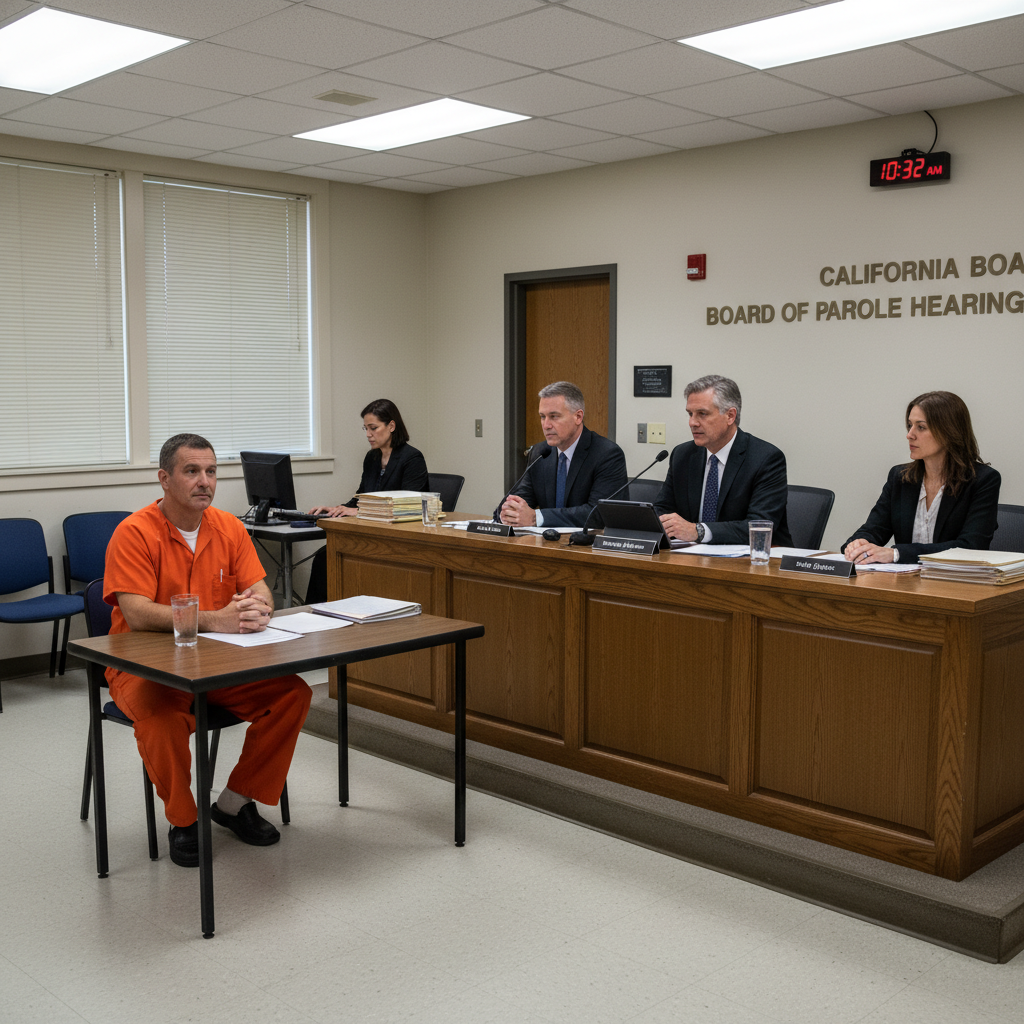
After more than 30 years behind bars, Erik Menendez is not getting parole just yet. On Tuesday, a California parole board determined that Erik, who was convicted with his brother Lyle of murdering their parents in 1989, continues to be “an unreasonable risk to public safety.”
A nearly 10-hour-long hearing focused on the question of Erik’s rehabilitation, his prison record, and the arguments for and against his release. It included statements from the Los Angeles County District Attorney’s office, which asked the panel to deny Erik parole, and from over a dozen relatives who urged the board to let him go free. In the end, the board agreed with prosecutors, citing Erik’s juvenile criminal record, the “callousness of the crime,” and “serious violations” of prison rules.
Erik, in his 50s, will next be eligible to appear before the parole board in three years. Parole Commissioner Robert Barton, in explaining the decision, said that it was not just the “seriousness of the underlying offense” at issue, but also the behavior in prison.
“One may create a risk to public safety in many ways, including by engaging in the types of criminal conduct you committed in prison,” Barton said to Erik. He also encouraged him to use the support of his family to avoid further violations.
Erik has accrued nine rule violations since he began his sentence, including for drug possession and possessing contraband items like a cell phone and lighter. While several members of the prison staff have submitted letters to the board touting Erik as a “model inmate,” Barton questioned the label in light of his infractions. Erik, in response, said that he had only started to believe last year that he might actually be released, and that his “consequential thinking” had changed.
Members of the family, many of them in tears, also testified to his parole, describing the last 35 years of pain and division the murders of their grandparents had brought, as well as the forgiveness they felt. “To say that our family has experienced pain does not quite capture what the last 35 years have been like,” said Tiffani Lucero-Pastor, the great-niece of the brothers’ mother, Kitty. “It has divided us. It has caused us panic and anxiety.”
Others said Kitty’s failure to stop the alleged abuse at home drove the brothers’ sense of fear further. Karen Mae Vandermolen-Copley, Kitty’s niece, said her aunt’s “absence of protection deepened their fear and confusion.” Kitty’s brother, Milton Andersen, was the only relative known to oppose Erik’s parole, but he died earlier this year.
In a statement after the decision, the family said they were disheartened, but understood the board’s position. “Our belief in Erik remains steadfast,” it said. “His remorse, his growth, and the positive impact he has had on those around him speak for themselves. We will continue to stand with Erik and hold on to the hope that he will be able to come home soon.”
Erik’s older brother, Lyle, will face the parole board next, with his hearing scheduled for Friday. The panel will review his record of rehabilitation and conduct in prison. Although Lyle has a few fewer disciplinary violations on record, his actions in the killings may count heavily against him.
Lyle, in his testimony at the original 1993 trial, said he had emptied a shotgun into both his parents at close range. At Tuesday’s parole hearing, Barton noted that the manner in which he killed his mother “evinces a lack of human compassion.”
Lyle has also been scrutinized for his shifting story of alleged abuse by their father. At one point, prosecutors said, he even asked his girlfriend to lie and say his father had drugged and raped her. These details may complicate his own bid for parole, despite support from a host of family members who will also speak on his behalf.
The parole hearings themselves follow the brothers’ resentencing in May from life without parole to 50 years to life in prison, making them eligible for parole for the first time. The case has been one of California’s most high-profile murder trials, driven in part by their initial claims that they were afraid for their lives after years of abuse. Prosecutors have said the killings were motivated by financial gain, pointing to the fortune their father was estimated to have.
Governor Gavin Newsom, in the end, has the last word on the fate of the brothers. Under a 1988 state law, governors have the power to approve, deny, or modify parole board decisions for all people convicted of murder and given indeterminate terms. The board’s ruling, in this case, will undergo internal review for up to 120 days before the governor has 30 days to take action.
Legal experts say that California governors have historically been wary of freeing high-profile prisoners. “Every governor is fairly allergic to releasing high-profile defendants,” said Christopher Hawthorne, a Loyola Law School professor. Pete Wilson, Gray Davis, and Arnold Schwarzenegger rarely allowed parole in such cases, but former governors Jerry Brown and Gavin Newsom have made a move to change that in the past decade, making parole easier to obtain.
That said, the notoriety of the Menendez brothers may well be an obstacle. As Hawthorne said, Newsom has to consider public safety, as well as whether the brothers have demonstrated real insight into their crimes.
For now, Erik will continue to be behind bars, with his next shot at parole at least three years away. Lyle will soon find out if his path leads elsewhere—or if the brothers will remain serving the life terms they began more than 30 years ago.