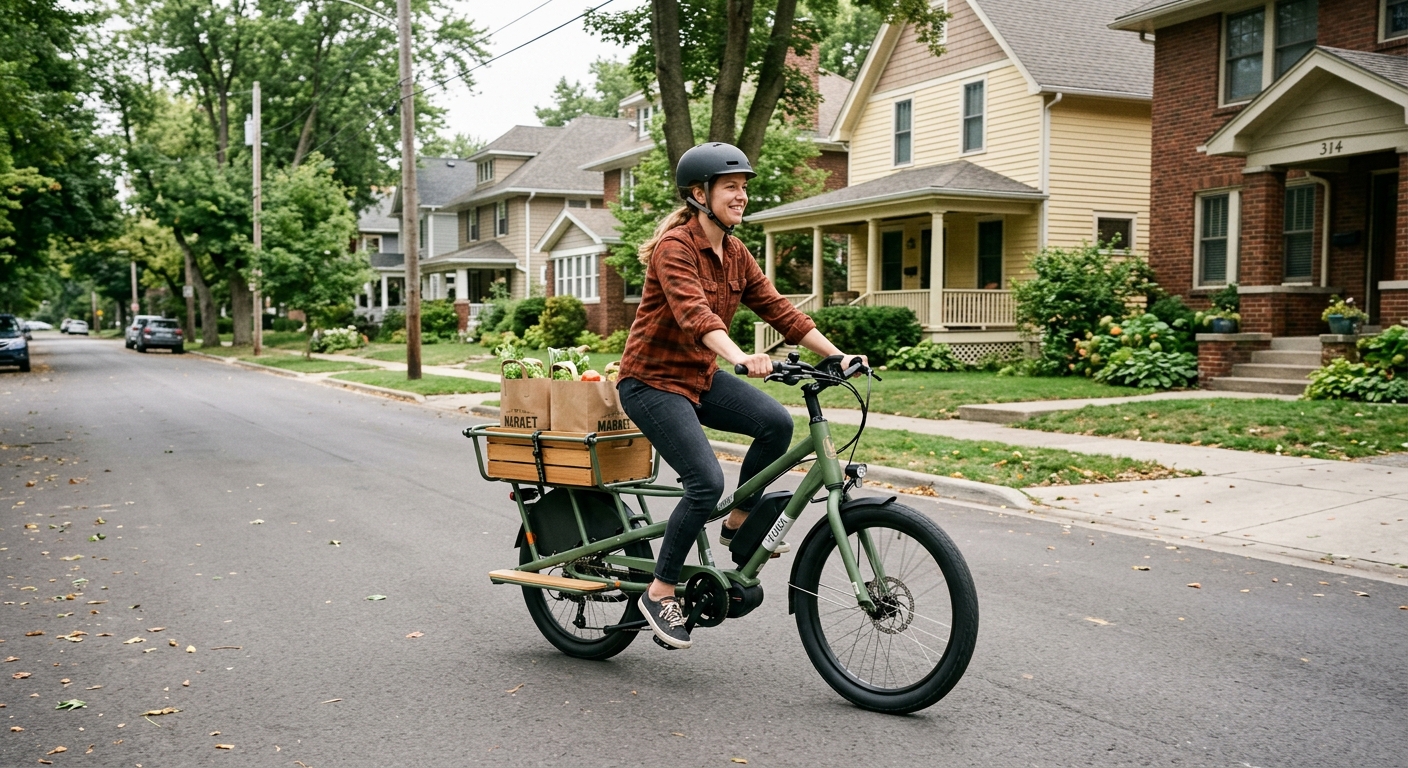
AI-generated illustration; not a photograph of the reported event.
- calendar_today July 11, 2026
The cargo bike library in Minnesota is transforming local urban transportation, providing residents with free access to electric cargo bikes and encouraging a shift toward sustainable travel. Established in Minneapolis and now expanding its reach, the initiative is helping communities throughout the region reimagine how they get around.
Expanding Access to Cargo Bikes in Minnesota
The Minnesota cargo bike library, founded by Laura Groenjes Mitchell, offers a distinctive cargo bike program designed to reduce reliance on cars across the region. Residents of Minneapolis and Rochester can borrow electric cargo bikes for approximately a week at a time, following a comprehensive bike safety and orientation session. This program directly addresses the need for low-emission alternatives to motor vehicles, while providing families and individuals an affordable way to experience sustainable transportation firsthand.
Electric Cargo Bikes: A Versatile Solution
Electric cargo bikes are at the heart of this growing movement, demonstrating their versatility through uses ranging from commuting and grocery shopping to transporting children and assisting mobility-impaired individuals. As more Minnesotans discover the value of bike sharing and cargo bike usage, the library continues to increase its fleet and outreach efforts, welcoming participants of all ages and backgrounds. Community bike programs like this have proven essential in promoting mobility justice and fostering broader acceptance of alternative transportation options.
Addressing Urban and Suburban Transportation Challenges
The program goes beyond providing access to bikes. It has become a hub for bike advocacy, championing the need for improved urban transportation infrastructure in Minnesota. Advocates and participants alike stress the importance of building and maintaining protected bike lanes and adding secure parking suited for large cargo bikes. These changes would not only make cycling safer but also further encourage adoption throughout a variety of neighborhoods, from dense urban corridors to sprawling suburban communities.
Community Building Through Shared Rides
One of the distinguishing features of the Minnesota cargo bike library is its emphasis on community. By enabling neighbors to connect over shared rides and mutual aid activities, the program demonstrates the social potential of bike sharing. Volunteers highlight moments where cargo bikes have supported daily errands, enabled group family rides, and helped organize community events. The overwhelming demand points to a growing desire among residents to strengthen neighborhood connections through shared transportation experiences.
Sustainable Benefits and Advice for Advocates
Participants frequently cite the financial, health, and environmental benefits of taking part in the cargo bike program. Using electric cargo bikes leads to measurable cost savings on fuel and vehicle maintenance. The shift to cycling promotes physical activity, while fewer car trips reduce emissions and air pollution across Minnesota communities. Contributors to the program encourage others interested in bike advocacy to engage with existing local groups, as collective action is seen as essential to advancing infrastructure improvements and expanding community bike programs even further.
Staying Connected and Looking Ahead
The founders and volunteers of the Minnesota cargo bike library provide updates through a dedicated website and active social media channels. As cargo bike usage and the popularity of sustainable transportation grow throughout the region, the program serves as a model for communities nationwide seeking to reimagine their streets, support inclusive mobility, and promote environmentally responsible travel. The library’s success underscores how combining access to innovative transport with targeted advocacy can shape the future of urban and suburban transportation in Minnesota.