- calendar_today August 24, 2025
.
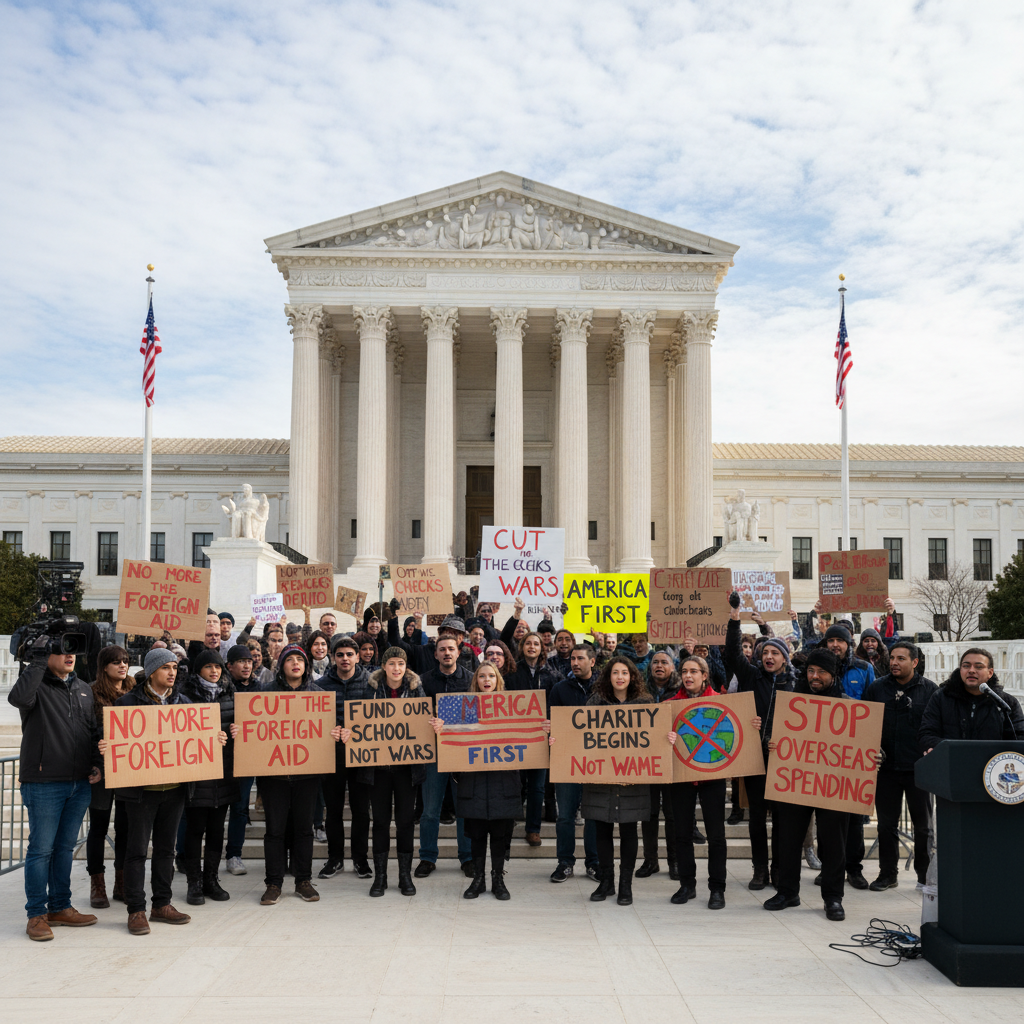
Lawyers for the Trump administration have asked the Supreme Court to allow the White House to block billions of dollars in foreign aid spending that Congress has already signed off on.
Attorneys for the government filed an emergency appeal to the high court on Tuesday night, sending the U.S. Agency for International Development (USAID) funding fight back to the nine justices for the second time in six months.
The legal battle at hand centers on nearly $12 billion in aid set aside for USAID, money that must be spent by the federal government before the current fiscal year ends on September 30. President Donald Trump wasted no time after returning to the White House in January, signing an executive order on his first day back in office that instructed the federal government to block nearly all foreign aid disbursements. The order was billed as a first step in a larger effort to “drain the swamp” by rooting out “waste, fraud, and abuse” in foreign spending.
The president’s executive order was quickly challenged in court and, in February, U.S. District Judge Amir Ali in Washington, D.C., ordered the administration to reverse course. The judge ruled the White House was required to release the money for projects Congress had already approved. Judge Ali’s decision forced the Trump administration to resume payments on billions of dollars in USAID grants.
The White House pushed back against the order. The U.S. Court of Appeals for the D.C. Circuit took up the case earlier this month and voted 2-1 to overturn Judge Ali’s injunction. Judge Karen L. Henderson, a George H.W. Bush appointee, wrote the opinion for the appeals court’s majority. In her ruling, Henderson found the plaintiffs in the case — foreign aid groups seeking to have their grant payments restored — didn’t have adequate grounds to sue the administration in the first place. Henderson wrote that the groups lacked a proper “cause of action” based on what’s known as the doctrine of impoundment.
The appeals court’s ruling is a big win for Trump. But the court has yet to issue a formal mandate to put its decision in place. That delay has left Judge Ali’s earlier order — and the payment schedule he created — technically in effect. The effect of that is to force the Trump administration to sprint to try to pay out the full $12 billion before the fiscal year comes to a close at the end of September.
Emergency Filing in the Supreme Court
U.S. Solicitor General D. John Sauer, who filed the emergency request with the Supreme Court on Tuesday, asked the justices to step in and make it easier for the government to hold onto the foreign aid money. In his filing, Sauer argued that unless the Supreme Court acts, the government will be “forced to rapidly obligate some $12 billion in foreign-aid funds that it cannot spend or otherwise use before they expire on September 30, 2019.”
Sauer further argued in the filing that federal courts shouldn’t resolve the question at hand, but instead that the funding decision should be left up to the “political branches” of government — namely, the White House and Congress.
“Congress did not upset the delicate interbranch balance by allowing for unlimited, unconstrained private suits,” Sauer wrote in the filing. He added that “any lingering dispute about the proper disposition of funds that the President seeks to rescind shortly before they expire should be left to the political branches, not effectively prejudged by the district court.”
The plaintiffs in the case — the foreign aid groups that rely on USAID money for development and humanitarian projects around the world — take a different view of the legal fight. In the groups’ view, the president has no power to block money Congress has already approved for spending. Their central arguments are based on a law known as the Impoundment Control Act (ICA) that was passed in the 1970s to rein in executive branch overreach with the federal budget and the Administrative Procedure Act.
The Supreme Court already weighed in on a similar dispute between the Trump administration and USAID this year, with the justices voting 5-4 to hand a narrow win to the administration on a procedural question. But, with billions of dollars on the line and the September 30 deadline approaching, Trump is once again asking the Supreme Court to step into the fight.
In the short term, Trump is using the executive order as part of a larger effort to shift U.S. spending priorities and assert greater control over foreign assistance programs. For aid groups, the money is a matter of survival: if they don’t get the promised aid, projects already in the works around the world will be scaled back or could close completely.
With the appeals court decision still in a sort of legal limbo and the Trump administration looking for the quickest way to end the fight, the Supreme Court’s decision on this latest emergency appeal could decide the fate of $12 billion in foreign aid and set a precedent on the limits of presidential power over congressionally appropriated funds.