- calendar_today August 21, 2025
.
Donald Trump said Monday the United States will allow 600,000 Chinese students to attend U.S. colleges in a sign that tensions between Beijing and Washington may be easing after months of saber-rattling over tariffs.
Appearing at the White House, the former president said he would allow the students in even as he continued to rattle the sabers by announcing a series of sweeping tariffs and threats of more to come.
“We hear stories of, we’re not going to let their students in,” Trump said. “We are going to let their students in. It’s very important, 600,000 students. It’s very important. But we’re going to get along with China.”
Trump has had an aggressive approach to China since taking office in 2017, hitting Beijing with thousands of tariffs and restrictions on trade and throwing down challenges to Chinese tech giants like Huawei. The moves followed a strong campaign by trade unions and supporters of high-tech manufacturing to protect American jobs from competition from overseas and curtail what many have claimed are the predatory practices of the Chinese Communist Party.
Beijing struck back hard this year, imposing a 145 percent tariff on all Chinese products entering the U.S. and, more recently, a 125 percent tariff on U.S. exports to China. The tit-for-tat measures have led to fears that both countries may be headed for a long and damaging trade war.
Talks in Geneva over the summer paused that standoff, with negotiators agreeing in May to hold off on any further tariffs. But Trump has talked about further punishments for China in recent weeks, suggesting as recently as last week a 200 percent tariff on Chinese-made magnets.
“China, very intelligently, went and they formed, in a sense, a monopoly on the world’s magnets,” Trump said. “It’ll probably take us a year to have them.”
The White House has tried to walk a line between pushing hard against Beijing and maintaining American options for cooperation in areas like education.
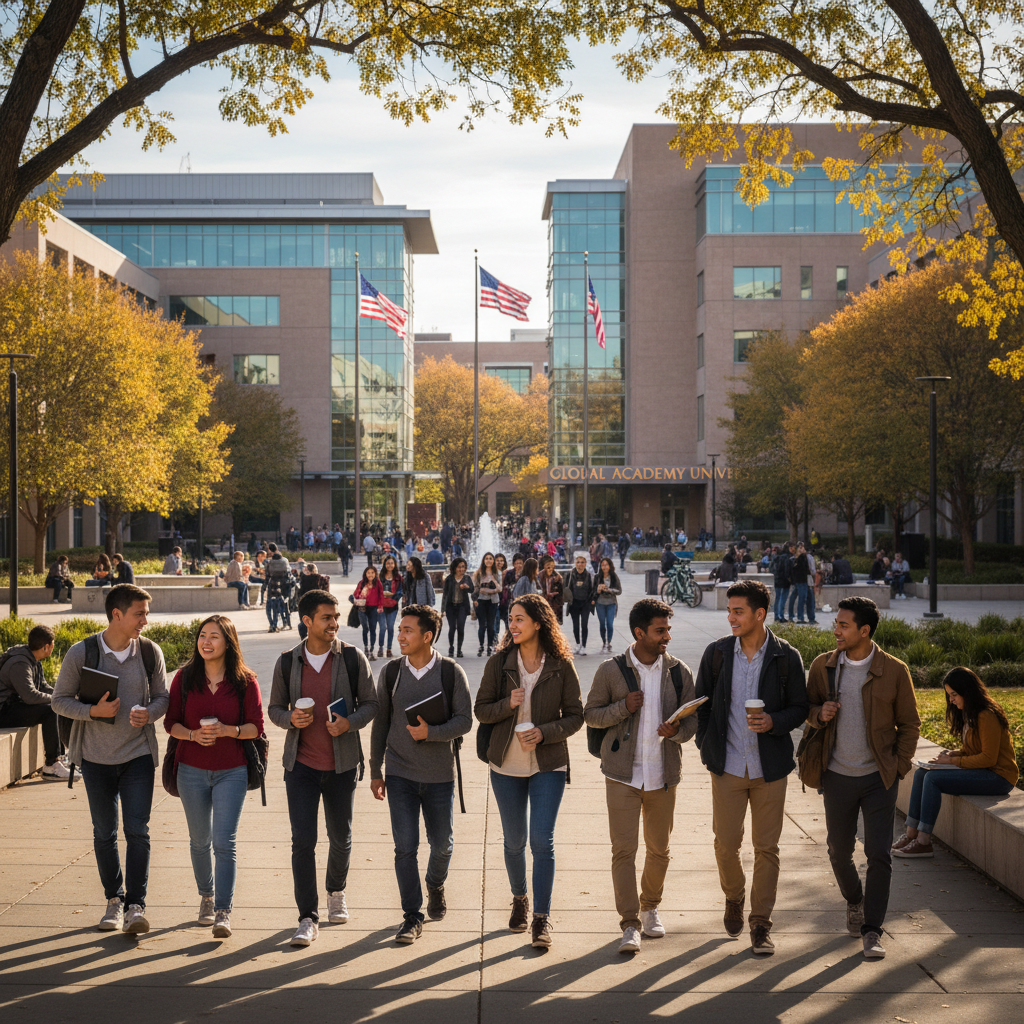
Currently, 270,000 Chinese citizens are enrolled in American universities. Trump’s proposed number of 600,000 would be more than double the current enrollment. But for many schools that are still reeling from the economic and cultural disruptions of the pandemic, the additional students would be a much-welcome shot in the arm, with their tuition dollars going to schools in need of cash.
In May, Trump’s Secretary of State Marco Rubio announced the administration was going to “aggressively revoke” visas for Chinese students, particularly those suspected of links to the Chinese Communist Party or in sensitive research and development positions.
The move sparked a backlash in the higher education community, with colleges and universities across the country decrying the move and predicting it would have an immediate, negative impact on research and enrollment.
Trump seemed to change his tone on the issue in June, telling reporters he had “always been in favor of allowing the students in.” In the same interview, he also said his new economic team was “studying very, very hard” the issue.
Monday’s comments continue that trend, suggesting a possible opening in the door between China and the U.S. when it comes to education.
Trump made the comments just before a meeting with South Korean President Lee Jae Myung was to take place in the Oval Office. When asked if he would be open to meeting with Chinese President Xi Jinping in the coming year, Trump replied that he would.
“I would like to meet him this year,” Trump said. “It’s very important to keep dialogue going. As you know, we’re taking a lot of money in from China because of the tariffs and the different things. It’s a very important relationship. But it’s a much better relationship economically than it was before with Biden. But he allowed that. They just took him to the cleaners.”
Trump’s policy of coupling student visa announcements with tough talk on tariffs seems to be a sign he is not going to give up on competing against Beijing in the economic space, while still leaving room for cultural and academic cooperation.
The potential windfall for universities is enormous. International students, particularly from China, provide billions of dollars each year for the American economy in tuition and fees, room and board, and other spending. An increase in enrollment from 270,000 to 600,000 would have a seismic impact on enrollment and would provide a much-needed windfall for institutions still hurting from the pandemic.
It also, though, points to one of the oddities in Washington’s approach to China of late, where some visas are revoked, more are welcome, and tariffs are threatened, while room is left on the table for high-level meetings.
For now, Trump’s words will be parsed in both Beijing and on American campuses as students and educators watch to see if his promises will become a reality.