- calendar_today August 27, 2025
Since January, Trump officials have repeatedly disparaged the ESA, with aides arguing that strict rules have impeded development and stymied “energy domination.” This year’s executive orders call for agencies to rewrite ESA rules in ways that could expedite fossil fuel projects, effectively sidestepping environmental reviews.
Critics like Burgum say the law is broken, its strict rules not doing enough to incentivize recovery. Scientists and legal scholars argue the issue is the opposite: Chronic underfunding and political whiplash have left the ESA reeling.
“We continue to wait until species are in dire straits before we protect them,” said David Wilcove, a professor of ecology and evolutionary biology at Princeton University. “That makes recovery far more difficult and expensive.”
When it comes to keeping species alive, experts say the ESA has prevented mass extinctions. In the 46 years since its passage, only 26 listed species have gone extinct under federal protection. In contrast, at least 47 species are thought to have gone extinct while on the waiting list.
“The ESA works more like a critical care unit than a hotel,” Wilcove said. “It’s as though we built a great hospital but never funded enough doctors or equipment.”
The ESA’s biggest success story is likely the bald eagle, once on the brink of extinction because of widespread use of the pesticide DDT and habitat destruction. By the 1960s, fewer than a few hundred nesting pairs remained in the lower 48 states. After DDT was banned in 1972 and the eagle was added to the ESA’s list in 1978, its population began to grow. By 2007, the bird was officially delisted with nearly 10,000 pairs nesting across the U.S.
The American alligator and Steller sea lion are other cases where targeted protections helped reverse declines.
While the ESA protects species on public lands, the law also covers private property. That has long been a point of contention. More than two-thirds of listed species spend some time on private land, and about 10 percent of species are found only on such lands.
“The minute you bring species onto your land, your ability to use that land is going to be limited and you can be prosecuted,” said Jonathan Adler, professor of environmental law at William & Mary. “That obviously discourages landowners from cooperating.”
Studies of certain species suggest those rules create “perverse incentives.” Research on red-cockaded woodpeckers, for instance, found timber was logged early in areas where the bird lived—likely to preempt habitat restrictions by the federal government.
Congress has attempted to sweeten the deal by offering tax breaks, conservation easements and other incentives to landowners for protecting species and habitat. Conservationists say such programs have diminished in recent years.
The ESA used to have broad bipartisan support. Today it is one of the most litigated environmental laws in U.S. history. Several administrations have tried to weaken it, but each time the rules have been reversed when a new president came in office.
Conservationists fear the Trump administration’s current assault on habitat protections—combined with a conservative-leaning Supreme Court—could do lasting damage to the ESA. In the meantime, climate change and other factors continue to push more species toward crisis levels.
Harvard Law School’s Andrew Mergen, who worked as a staff attorney on ESA cases for three decades, argues the answer is not deregulation but resources. “The law has prevented extinctions,” he said. “The real challenge is committing enough funding and political will to help them recover, not dismantling the protections that keep them alive.”
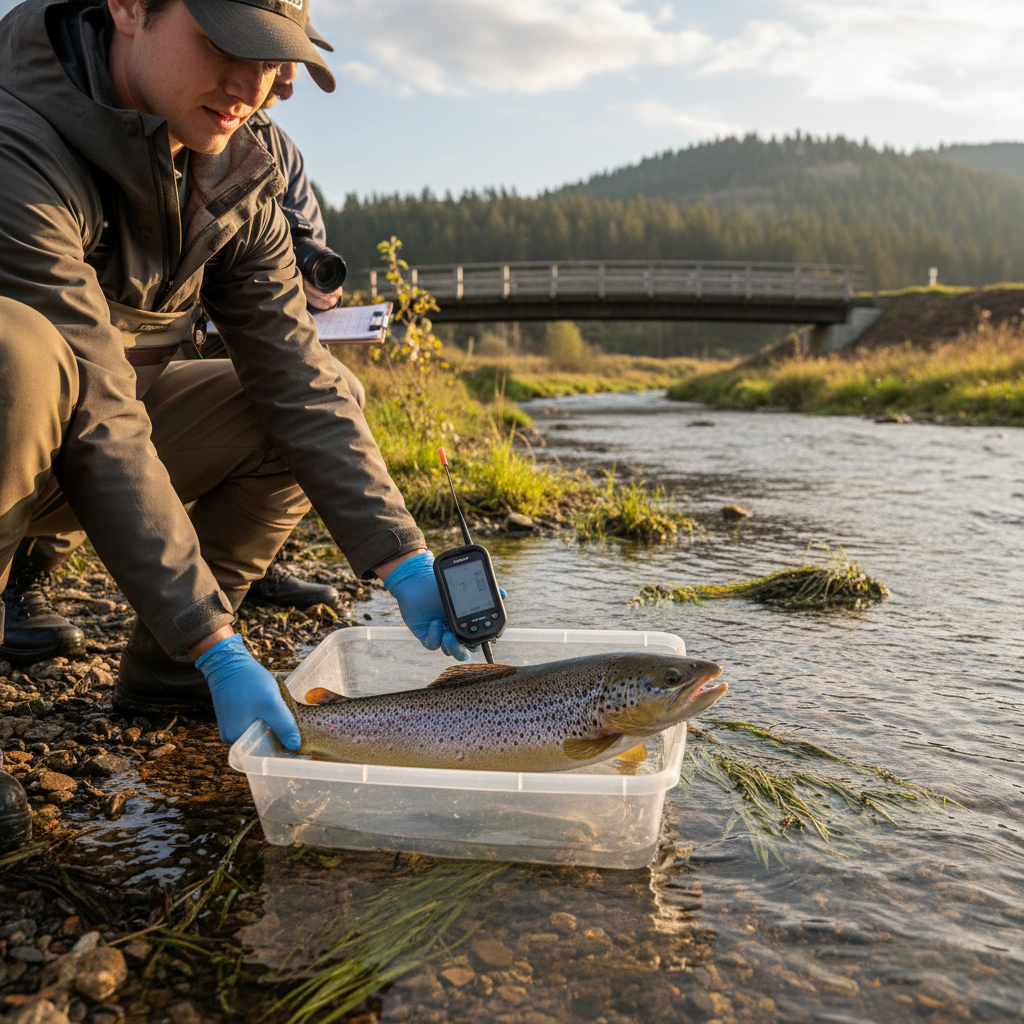
Amidst this fight, a July announcement offers a hint of hope. The U.S. Fish and Wildlife Service said the Roanoke logperch, a freshwater fish, has recovered enough to be taken off the endangered list. Burgum was quick to tout it as “proof” the ESA is no longer “Hotel California.”
Conservationists say the recovery is the result of more than three decades of dam removals, wetland restoration and reintroduction efforts, often costly and involving years of painstaking work. Most of those efforts began long before the Trump administration.
“The optimistic part,” Wilcove said, “is that we know how to save species when we invest in them. The question is whether we’ll make that commitment.”