- calendar_today August 17, 2025
At what was billed as a press conference to discuss a European Union trade deal, former US president Donald Trump found time to hit a favorite target: renewable energy. “The windmills, or the wind turbines, are a con job,” he said. “They make the whales loco. … They kill all the birds. I even heard they kill people. You know that.” While Trump’s exclamation points and vivid metaphors are the stock in trade of his rhetorical style, the comments are also a signpost to a much older and more global set of conspiracy theories around renewable energy, and in particular, wind energy.
Trump has frequently, and recently, taken to referring to turbines as “windmills.” It is something of a staple of the climate denial lexicon. An earlier example of similar moral panic was the worry that telephones would spread syphilis and other diseases. The telephone panic is a window into the cultural role of a technological shift. Like wind turbines, telephones marked a move away from established, often rural, modes of living and toward urban, fast-paced, less immediately understandable modes. At each step, the new technology symbolized changes to the power structures that elites were accustomed to.
Studies indicate that the resistance goes much deeper than a poor understanding of how energy works. Conspiracy theories, once embedded in a person’s belief system, are not easily countered with fact-checking or appeals to science. That’s a real problem for governments, companies, and organizations trying to speed the shift to clean energy.
Origins and Evolution of Anti-Wind Conspiracy Theories
Even as climate science had been warning since at least the 1950s that carbon dioxide emissions could cause significant, and relatively imminent, environmental upheaval, the early push for renewables had been couched in terms of a battle against the dominance of fossil fuel companies.
A well-known cultural example of this is The Simpsons episode where the tycoon Mr. Burns builds a tower so tall it blocks out the sun and forces the citizens of Springfield to buy his nuclear power. The cartoon’s plot was an exaggeration of satire, but it contained a kernel of real-world truth: that fossil fuel interests would work to keep renewables from developing too fast.
In point of fact, fossil fuel advocates spent years, decades, and even generations working to fight the transition. For instance, then–Australian Prime Minister John Howard in 2004 formed a coalition of fossil fuel executives and like-minded groups known as the Low Emissions Technology Advisory Group. Despite its name, the group was formed not to accelerate the transition but to slow it, to protect the dominance of coal, oil, and gas.
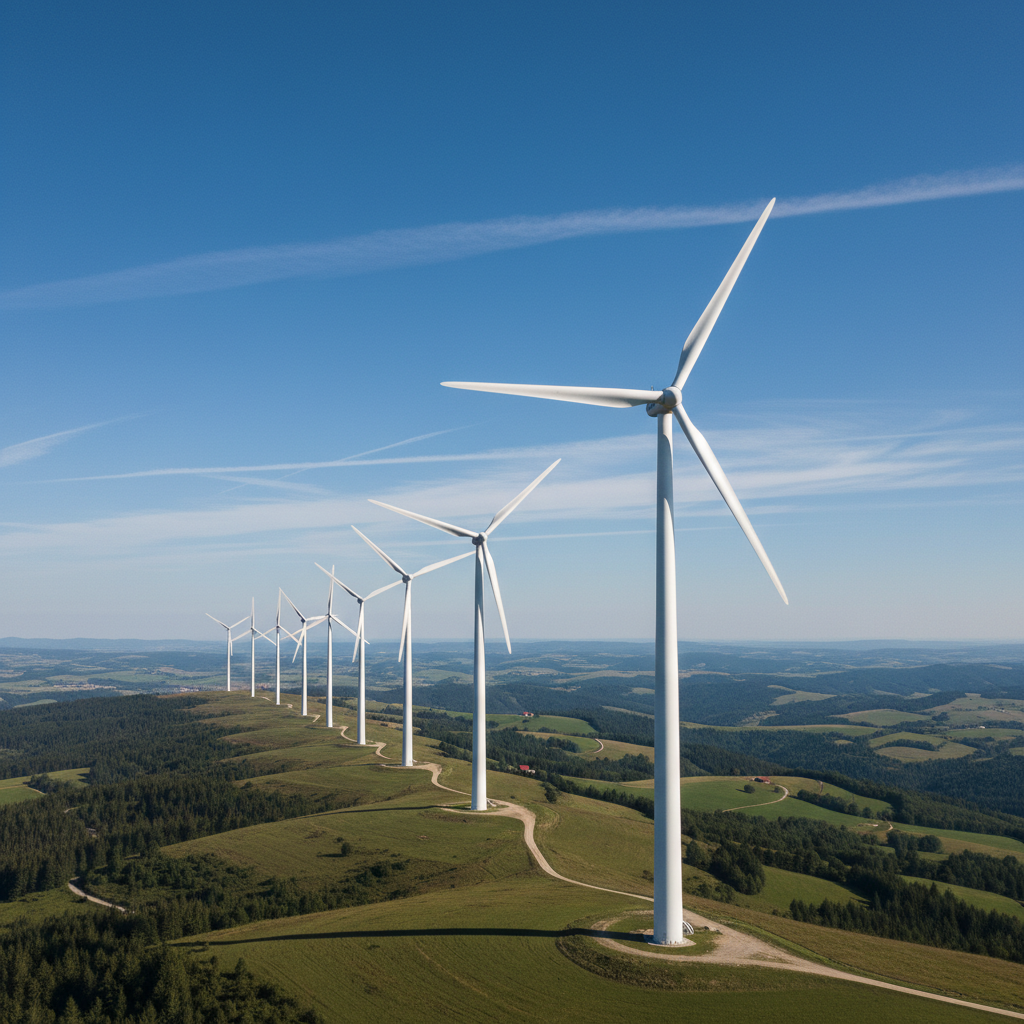
Wind turbines, by contrast, have tended to be more visible than coal mines, oil fields, and nuclear plants. Wind farms are often built on ridgelines or open plains, making them highly visible to the public. Turbines have also become targets for both critics and conspiracy theorists. Myths about “wind turbine syndrome,” a “non-disease” according to medical professionals, have been repeated for years.
Academic research bears out the connection between belief systems and wind farm opposition. In a study led by Kevin Winter in Germany, the researchers found that age, gender, level of education, and political affiliation made little difference to people’s attitudes toward wind farm development, but conspiracy thinking did. Recent surveys of American, British, and Australian citizens have found similar patterns. For those who believe in conspiracies—whether they concern climate change, government control, or energy security—wind turbines are equally likely to be seen as a cause of harm.
Attempts to convince people with data that wind farms do not poison groundwater or cause mass blackouts have generally proven fruitless, because the opposition is based on a worldview rather than a lack of understanding of how energy works. As Winter and his colleagues wrote in their study, “opposition is rooted in people’s worldviews.”
Wind farms are highly visible and, by the nature of their design, monumental. They have thus become a flash point in a larger debate. For their supporters, wind farms symbolize progress, innovation, and climate action. For their opponents, they represent government overreach, loss of control, and unwanted change.
At the base of this lies a more profound sense of cultural change. For more than a century, fossil fuels have powered a remarkable era of prosperity. To some people, the acceptance of the environmental damage caused by this energy use feels like a repudiation of the success of the past. Social scientists call this a refusal to “reflexivity” or to think about the negative aspects of modern industrial society. Trump’s often-nostalgic rhetoric for the time of coal, oil, and gas neatly slots into this category.
Identity politics play a part, too. Men’s rights, anti-feminism, and misogyny all tend to come up against the acceptance of climate change; to complain about climate change and worry about women, in these spaces, is seen as weak or effeminate. To many boomers, especially white heterosexual men, the transition to a clean energy economy is a disorienting change in a world that once felt as if it was tilted in their favor. The transition to renewables is about not just energy sources and technology but about culture and identity.
Against this backdrop, Trump’s barbs at “windmills” are music to the ears of voters for whom the energy transition is a threat and not an opportunity. His exclamation points and vivid metaphors are the stock in trade of his rhetorical style, but the comments also show how he’s working to harness his supporters’ deep-seated views. While his metaphors about whales, or birds, or any other feature of the energy transition are often colorful, the more important fact is that the resistance to renewable energy is seldom about the energy source itself. It is about power, identity, and an uncomfortable reckoning with the world.