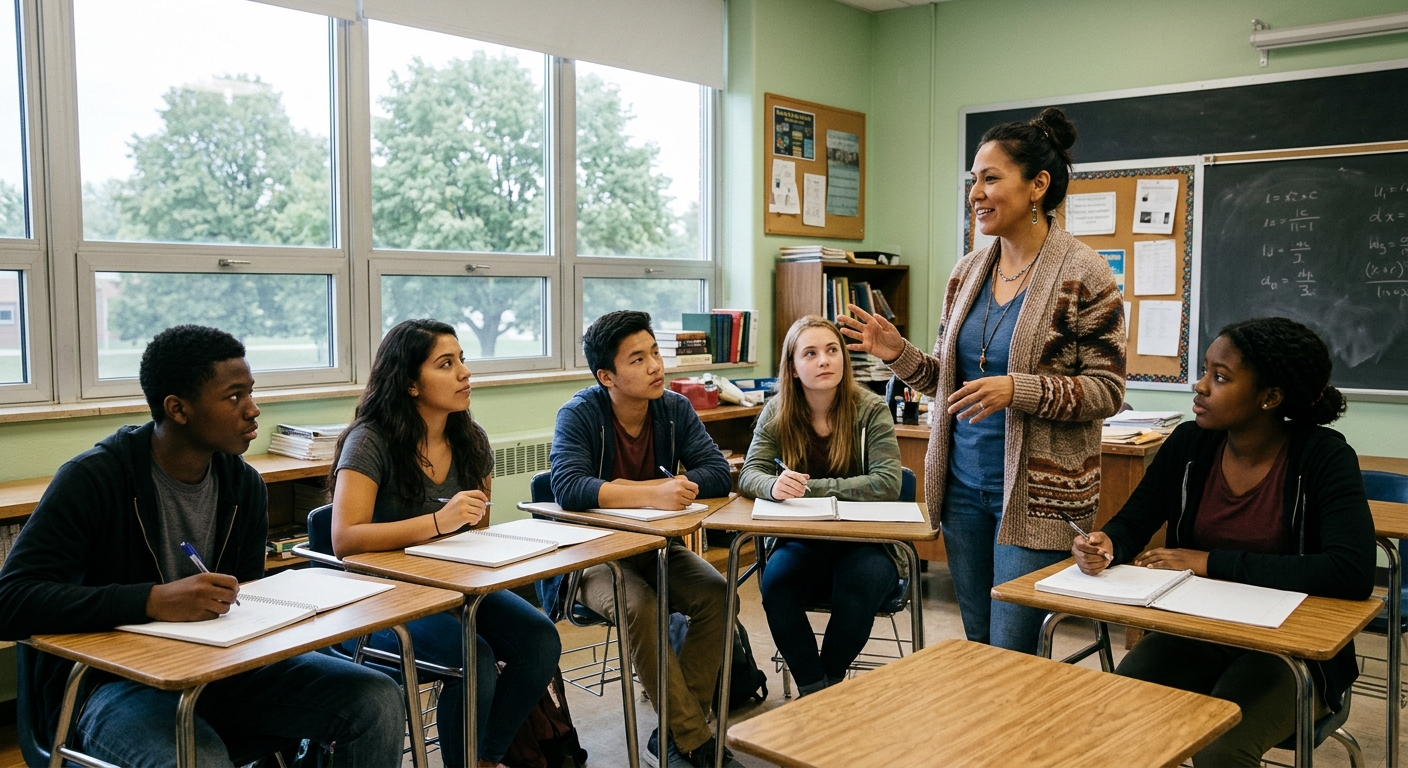
AI-generated illustration; not a photograph of the reported event.
- calendar_today November 2, 2026
Ojibwe Language Debuts in Anoka-Hennepin Schools
This fall, Anoka-Hennepin School District introduced Ojibwe language classes for the first time, a move that students and educators see as an important step in language revitalization and American Indian education. The course, taught at Coon Rapids and Anoka High Schools, has drawn participation from about 20 students ranging from freshmen to seniors.
A Teacher's Cultural Ties and Community Excitement
The classes are led by Tayah Reyes, an Ojibwe language teacher who is a citizen of the St. Croix Band of Chippewa Indians and a descendant of the Ho-Chunk Nation. Reyes noted enthusiastic support from parents and guardians during the school year's open house, saying, “We are so excited, and thank you for taking this job, and thank you for doing this,” she recalled. Many students also expressed happiness about the opportunity to learn their ancestral tongue.
Responding to the Needs of Indigenous Students
Anoka-Hennepin serves nearly 1,200 students who identify as Indigenous. Mindy Meyers, the district's American Indian Education Coordinator, said the decision to offer Ojibwe followed requests from students through the district's American Indian Education Program for more language learning opportunities, including Ojibwe and Dakota. The decision was shaped by community feedback and available resources.
Collaboration with the Midwest Indigenous Immersion Network
To help start the program, the Anoka-Hennepin district partnered with the Midwest Indigenous Immersion Network, a nonprofit that provides resources, professional development, and training for Ojibwe language education. Executive Director Gimiwan Dustin Burnette emphasized that most Indigenous people in Minnesota live off reservations, making language classes in public schools especially valuable. He also highlighted the importance of broadening access to Indigenous language and culture for both current students and future teachers.
Challenges in Meeting Language Education Laws
The program comes at a time when a study by the Midwest Indigenous Immersion Network found that Minnesota schools are not fully meeting requirements to offer American Indian language and culture courses. State law mandates that public schools provide such classes if at least five percent of their students are American Indian. The study estimated that hiring 150 additional language teachers would be necessary for statewide compliance.
Students Embrace Language and Culture
Students like Vincent Green, an 11th grader and descendant of the Red Cliff Band of Lake Superior Chippewa and White Earth Nation, say that learning Ojibwe is essential to preserving their culture. “It's important to me that I'm learning it because I'm lucky to have it free, and because I want to preserve it since it is part of me,” Green said. Ninth grader Isaiah Kingbird, from Red Lake Nation and Seneca descent, echoed the sentiment, hoping that more people will learn and use the language.
Expanding Access for All Students
The Ojibwe course is open to all students, Indigenous and non-Native alike. Meyers believes including Indigenous languages in school curriculums exposes students to new worldviews and contemporary Indigenous culture. "When non-Native students take an Indigenous language course, they're seeing contemporary examples of Indigenous people, and they're also getting to step into this other worldview that they may not get access to in their other courses," she said.
Looking Ahead: Hopes for Program Expansion
Currently, only the beginner-level Ojibwe class is available, but students and educators are hopeful the program will expand with a level two course in the coming year. As Ojibwe language education grows, the district aims to foster greater cultural connection and awareness among all its students.
Source: mprnews.org.