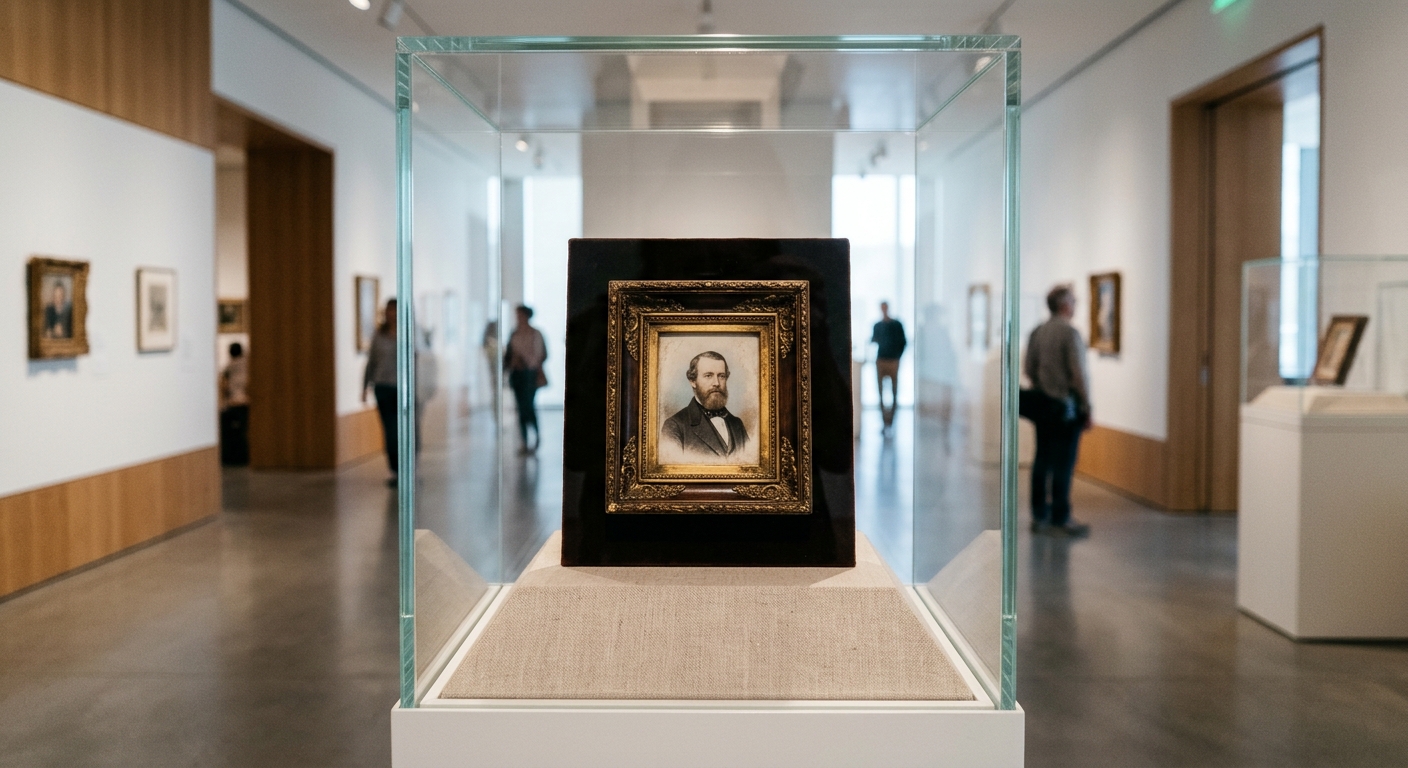
AI-generated illustration; not a photograph of the reported event.
- calendar_today November 6, 2026
A Holocaust-Era Artwork With a Journey Across Generations
A three-inch watercolor miniature created in 1847 by Austrian artist Albert Theer has completed an extraordinary journey through history, loss, and recovery. Stolen from a Jewish family in the wake of Nazi Germany's annexation of Austria, the portrait is now available for public viewing at the Minneapolis Institute of Art (Mia) in gallery 362 until May 3, 2027.
The Artist and the Subject
The painting, a diminutive but significant artwork, depicts Carl Graf Gleispach, an officer in the Austrian Empire’s army. Though small in size, its story is a powerful reminder of the personal losses suffered during the Holocaust and the continuing importance of historical art restitution.
From Vienna to Minnesota: A Family’s Loss and Recovery
This portrait originally belonged to Eduard Epstein, a Jewish textile merchant and renowned art collector from Vienna. In 1938, after Nazi forces annexed Austria, Epstein’s property—including his art collection—was seized. The painting later resurfaced in 2013 when it was discovered in the collection of Vienna’s Museum of Military History.
Just three months ago, the watercolor was officially returned to Epstein’s great-niece, Minnesota resident Jackie Sondell. Austrian Deputy Consul General Johannes Gassner personally presented the artwork to Sondell during a ceremony in Minnesota, marking a poignant act of holocaust restitution for the family. Sondell’s own ties to this tragic history are profound, as three of her grandparents perished in the Holocaust.
Exhibition at the Minneapolis Institute of Art
Jackie Sondell has graciously lent the miniature painting to Mia, where it offers visitors a tangible connection to the ongoing stories of Jewish families, Nazi stolen art, and the impact of historical art restitution. Sondell shared her hopes for those viewing the watercolor, stating, “I hope the small 3”x 2” painting provides an education on the extreme losses and suffering that happened in the Holocaust. Its importance isn’t measured by its artistic fame – it’s not the Mona Lisa – but by its ability to connect generations and encourage people to confront and remember what happened during the Holocaust.”
Reflections From Mia’s Curatorial Team
Galina Olmsted, Associate Curator of European Art at the Minneapolis Institute of Art, acknowledged the weight of the occasion: “The restitution of the Theer watercolor cannot undo the grievous harm done to the Epstein family and so many others, but it is a meaningful acknowledgment of Austria’s historical responsibility.” The museum’s Judaica gallery now hosts the artwork, inviting the public to reflect on holocaust remembrance and the stories behind museums' stolen art.
The Ongoing Work of Art Restitution
The display of this holocaust era artwork stands as a testament to the importance of documenting and addressing the thefts that occurred during the Nazi era. Through objects like the Albert Theer painting, institutions and individuals together promote education on the Holocaust, support historical art restitution, and honor the legacy of those who suffered under Nazi persecution.
Related coverage
Source: millcitytimes.com.