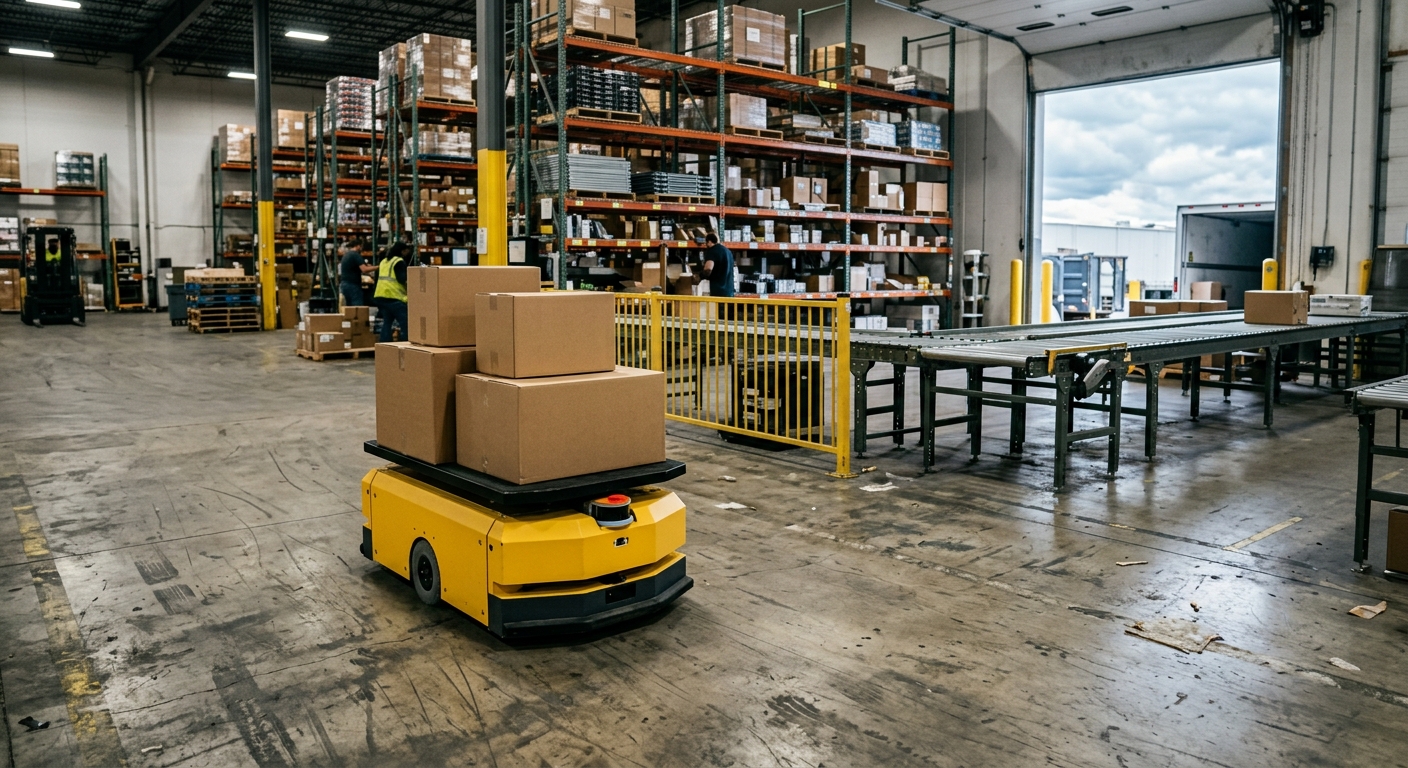
AI-generated illustration; not a photograph of the reported event.
- calendar_today September 5, 2026
Warehouse robots are playing an increasingly vital role in Minnesota’s logistics landscape, mirroring a broader North American shift toward automation. In the first six months of 2026, companies across the United States and Canada ordered nearly 18,000 industrial robots valued at $1.166 billion, a 2% uptick in units and a more significant 6.6% climb in spending compared to the prior year. This trend highlights how warehouse automation is rapidly evolving from a niche investment to a standard operational priority for businesses in Minnesota and beyond.
Rising Demand Driven by Labor and Fulfillment Pressures
The Minnesota warehouse sector, like much of the region, faces ongoing labor costs and staffing shortages. These challenges, alongside consumer expectations for swift order fulfillment, have spurred businesses to invest in warehouse robots and broader warehouse automation. Rising wages and an abundance of job openings make robotics an attractive solution, particularly for handling repetitive, physically demanding tasks that are otherwise difficult to staff.
Advancements in Robot Integration and Spending Patterns
Although the growth in the number of robots installed is modest, expenditure on robot systems is increasing more quickly. This surge in robot spending reflects heightened demand for integrated automation solutions that streamline the entire logistics process. Effective robot integration is essential—automated systems must work seamlessly with conveyors, inventory tracking, and other critical infrastructure for optimal efficiency in Minnesota’s busy logistics hubs. As companies seek higher productivity, investment in comprehensive robot software is becoming a necessity.
Diversification Beyond Automotive Manufacturing
While automotive companies remain significant buyers, other sectors—such as electronics, pharmaceuticals, and consumer goods—are ramping up their adoption of industrial robots. In Minnesota, these trends are shaping new opportunities for collaborative robots, which are valued for their flexibility and ability to safely work alongside human staff. Mobile robots are also gaining prominence, as businesses look for agile solutions to adapt to evolving warehouse logistics demands.
Integration and Coordination Remain Top Challenges
As warehouses across Minnesota deploy more robots, effective robot integration stands out as a key challenge. Coordinating machinery, mobile robots, and sophisticated robot software demands technical expertise and careful planning. For many organizations, the complexity of integrating warehouse robots with existing digital and physical infrastructure is the biggest obstacle to achieving seamless warehouse automation.
Case Studies Highlight Potential
High-profile implementations, such as Amazon’s expansive robotic fleets, showcase the tremendous potential of coordinated robots in large-scale distribution. In Minnesota, local companies are beginning to follow suit, adopting solutions tailored to their warehouse logistics requirements. Automation growth remains steady as advanced robotics systems deliver better speed and consistency in order fulfillment.
Normalizing Robotics in Minnesota Logistics Operations
The normalization of warehouse robots represents a pivotal shift for Minnesota’s supply chain sector. As automation growth continues, investments are not limited to machines alone—there is increasing emphasis on integrating robot software and comprehensive systems, ensuring the safe, efficient cooperation of both human and robotic teams. This direction is expected to shape warehouse logistics throughout the region for years to come, promising more resilient and responsive operations in the face of future challenges.